05.02.25
Spor10: Putting people & health first in neighbourhood development
11 min read
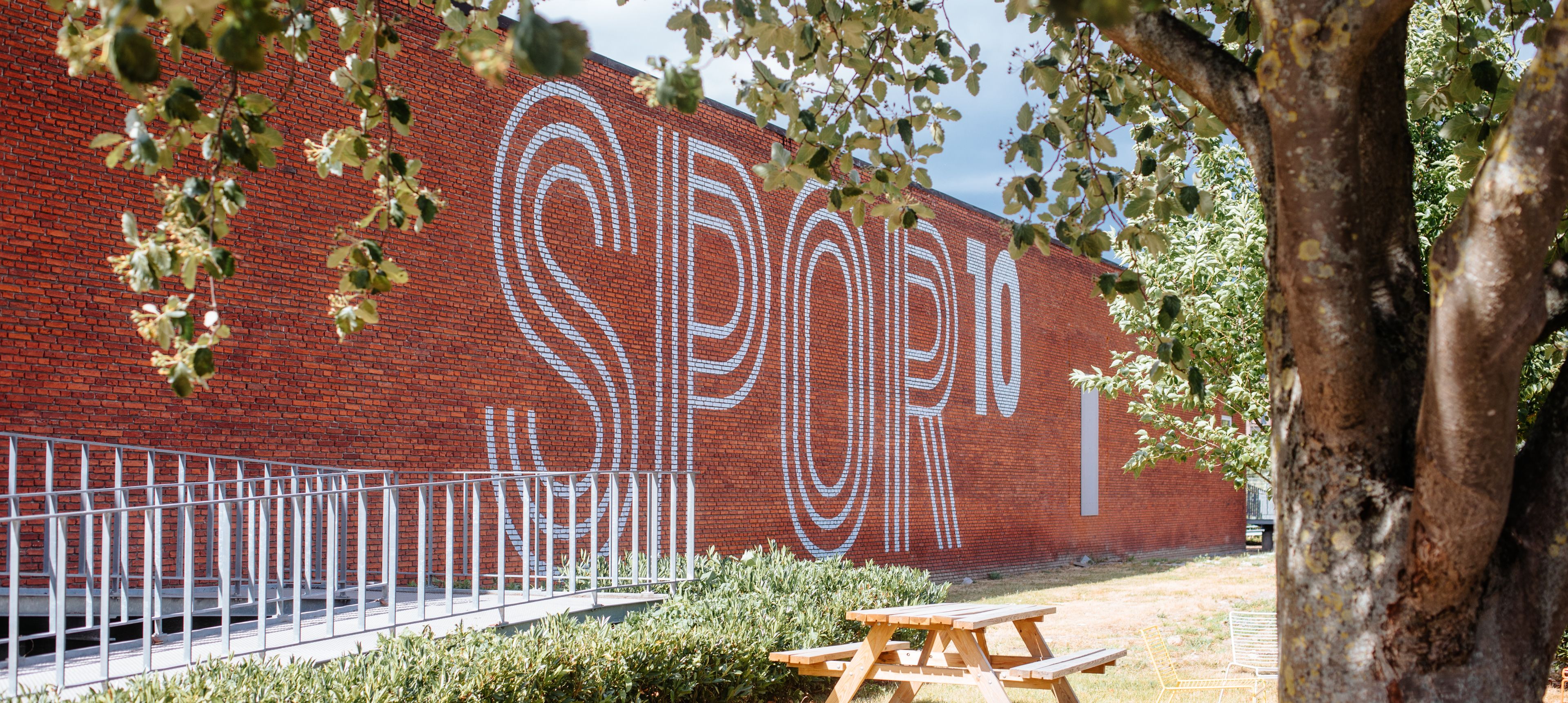
Over the next decade, the plan is for The Railway District to become a mixed-use neighborhood with over 8,000 residents of different backgrounds and 4,000 workplaces, ranging from large offices to small businesses and workshops. Anchored in a progressive master plan developed by Cobe, the area will be stitched together with acres of new parks, streets that prioritize people rather than cars, and extensive social infrastructure. The project is being stewarded by the two long-time landowners, DSB, the Danish state rail company, and Freja Ejendomme, the Danish state real state company, with Nrep, Urban Partners’ real estate investment & development arm, who manage a consortium of investors that include Novo Holdings and Industriens Pension.
The municipality of Copenhagen and local councils have been closely involved from the beginning of the neighborhood development project and the process is now underway for the local plan, with construction expected to begin in 2025. The project has high ambitions for decarbonization and demonstrating a holistic approach to neighborhood planning that can make healthy lifestyles easier, and it has attracted significant international attention as a flagship pilot in
One of the most innovative parts of The Railway District project is how social infrastructure is being prioritized from the earliest stages, embodied by Banegaarden on the north side and the Spor10 community hub on the south side.
Bringing people together
Spor10 has already been bringing people together for over a year at the one large historic building on the site’s south side, as the home for dozens of associations serving diverse ages and populations. These groups focus on social, physical and mental health through activities like communal dining, intergenerational cycling, gymnastics, boxing, maker workshops, scooting, roller dancing, ice bath, saunagus and breath work, and their presence is laying the foundations of the future community in The Railway District. Alongside these associations, there are regular special events that bring people together around a wide range of topics – from working with dementia in cities to circular building technologies to Magic playing cards to cargo bike racing to the future of urban food systems to national gatherings of groups working on affordable housing. In addition, the space hosts a model on the overall development of Jernbanebyen, has been the home for local universities, such as conducting research, is a starting point for many tours of the area, and is an anchor for the municipality’s engagement with the public. The city has dedicated special resources to reach groups typically left out of public engagement processes, including school children, elderly and others, and has used Spor10 for workshops and exhibitions.
Social infrastructures are physical and social structures that foster relationships and help communities thrive and connect. They play a key role in supporting preventative health initiatives while yielding a mix of social, civic, and economic benefits.
Liselott Stenfeldt, Director of Research & Development, Gehl
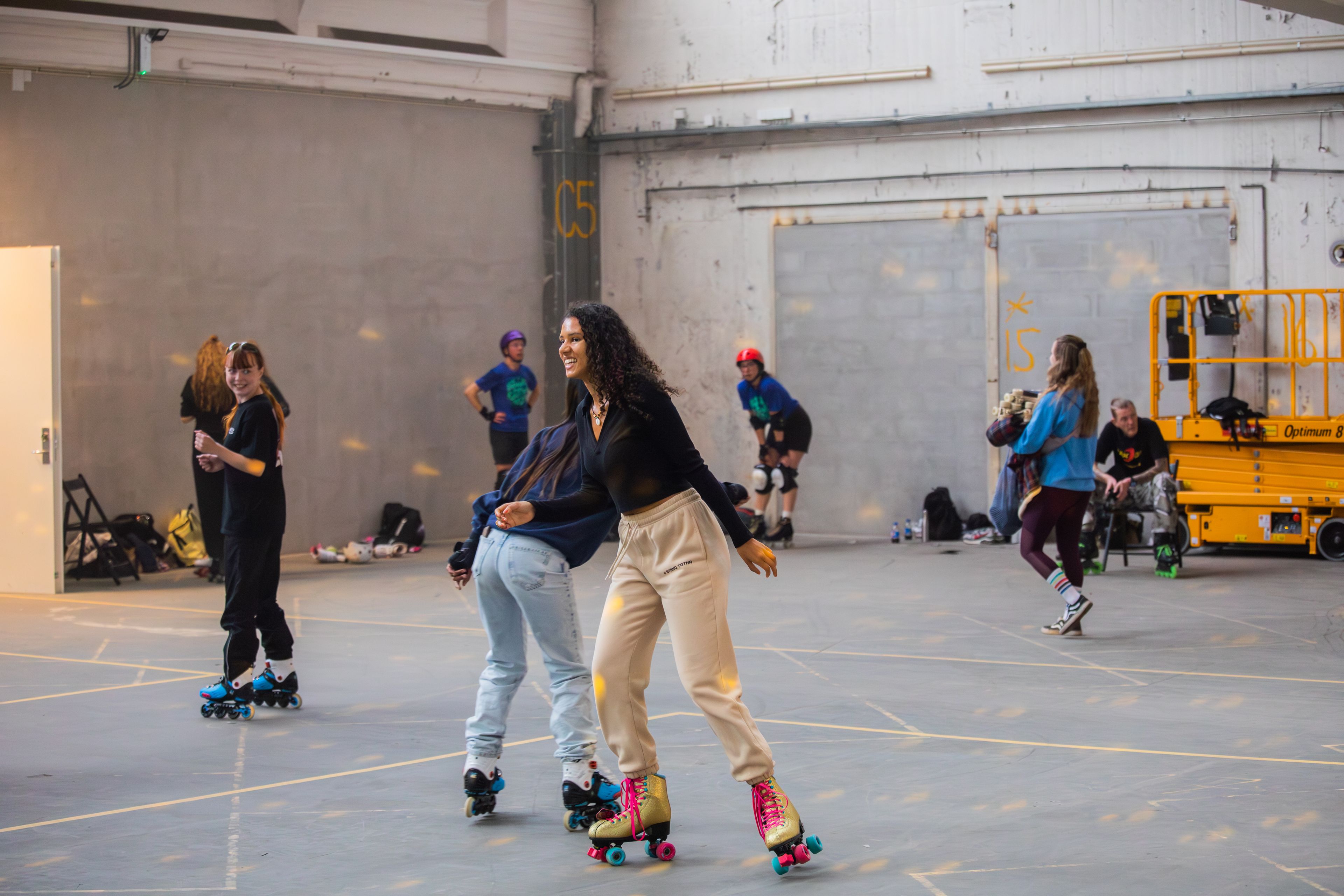
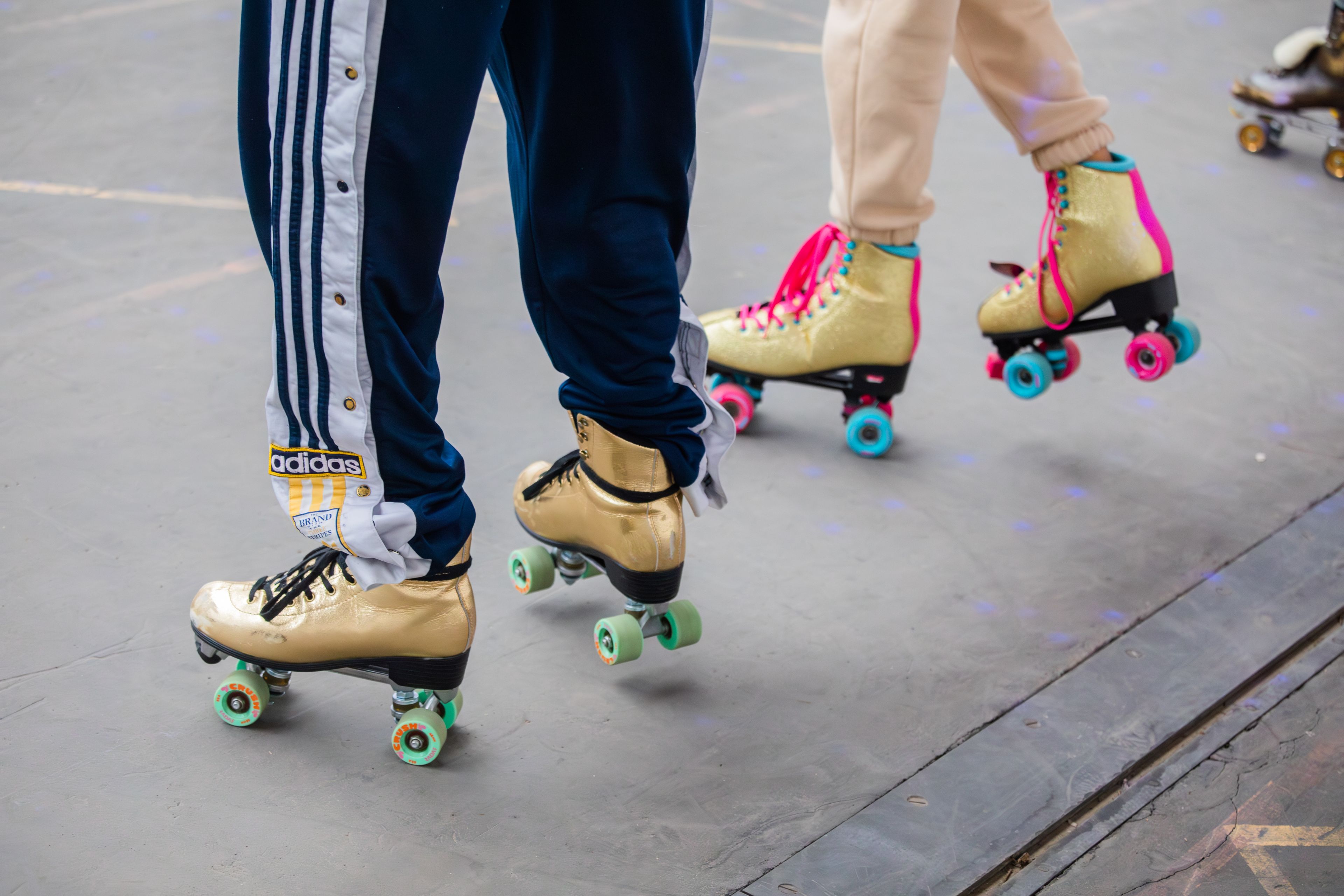
Mills has been an anchor association at Spor10, supporting youth of diverse backgrounds in skating and roller discos for the wider community of Jernbanebyen.
Photo by Evald Munksgaard Hansen, courtesy of Novo Nordisk
From the earliest master plans for the Jernbanebyen's development, the core halls and iconic rooftop of the Toldkammerbygingen (The Customs Building) from 1964 were intended to be preserved and transformed into the heart of the new neighborhood.
As is typical for most large-scale development projects, the initial plan was to activate the space after building the first offices and housing. Two years ago, though, Urban Partners teamed up with and many other partners to devise and implement an alternative approach that started to establish the long-term community hub already in the zoning process, making social infrastructure the catalyst and core of the new neighborhood development. Concretely, this alternative approach meant working with the existing building that will be transformed and sit at the heart of the new neighborhood.
Looking back, we have identified a few key learnings to share with the wider ecosystem of urban leaders seeking to create vibrant, inclusive neighborhoods.
Working across two time scales
Neighborhood development inherently takes a long time. This long-term nature requires a different way of working that always is moving at two paces at once – the immediacy of the now and a clear picture of years into the future.
Spor10 exemplifies an approach that integrates a long-term vision for the whole area (i.e. an innovative example of healthy urban development) with the long-term plan for a specific site (i.e. transformed rail customs house into community hub). It then uses the near-term to experiment with how best to achieve these long-term goals while building meaningful community from the beginning.
Working on these time two time scales at once is not easy. It has required everyone acknowledging the space and its uses today is part of an experimental process. All agreements at the outset were only for one year with the intent to integrate actors and insights into the long-term space that will exist in the transformed building. For safety reasons, the building cannot be occupied while it is transformed, so this experimental approach requires also maintaining community and continuing to build insights for the long-term on a different site in the coming years – an exciting, but real challenge that comes with taking this innovative approach to working on two time scales at once.
While it’s not new to activate historic buildings early in the development process, Spor10 is unique in having the near-term structurally linked to the long-term use, ensuring that the culture and community that is started at the beginning carries through over time.
Jens Kramer Mikkelsen, Director, Urban Development, Urban Partners
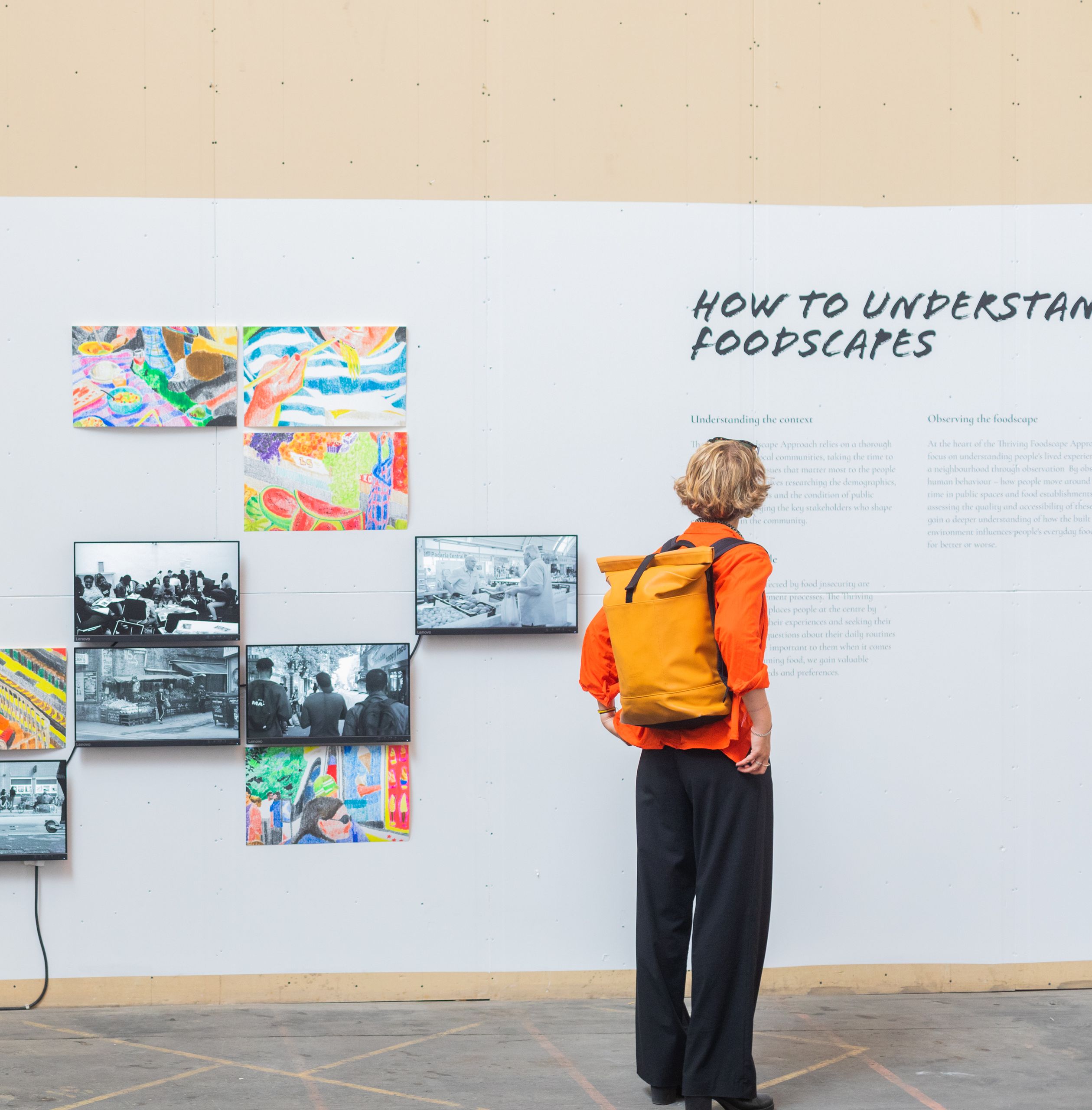
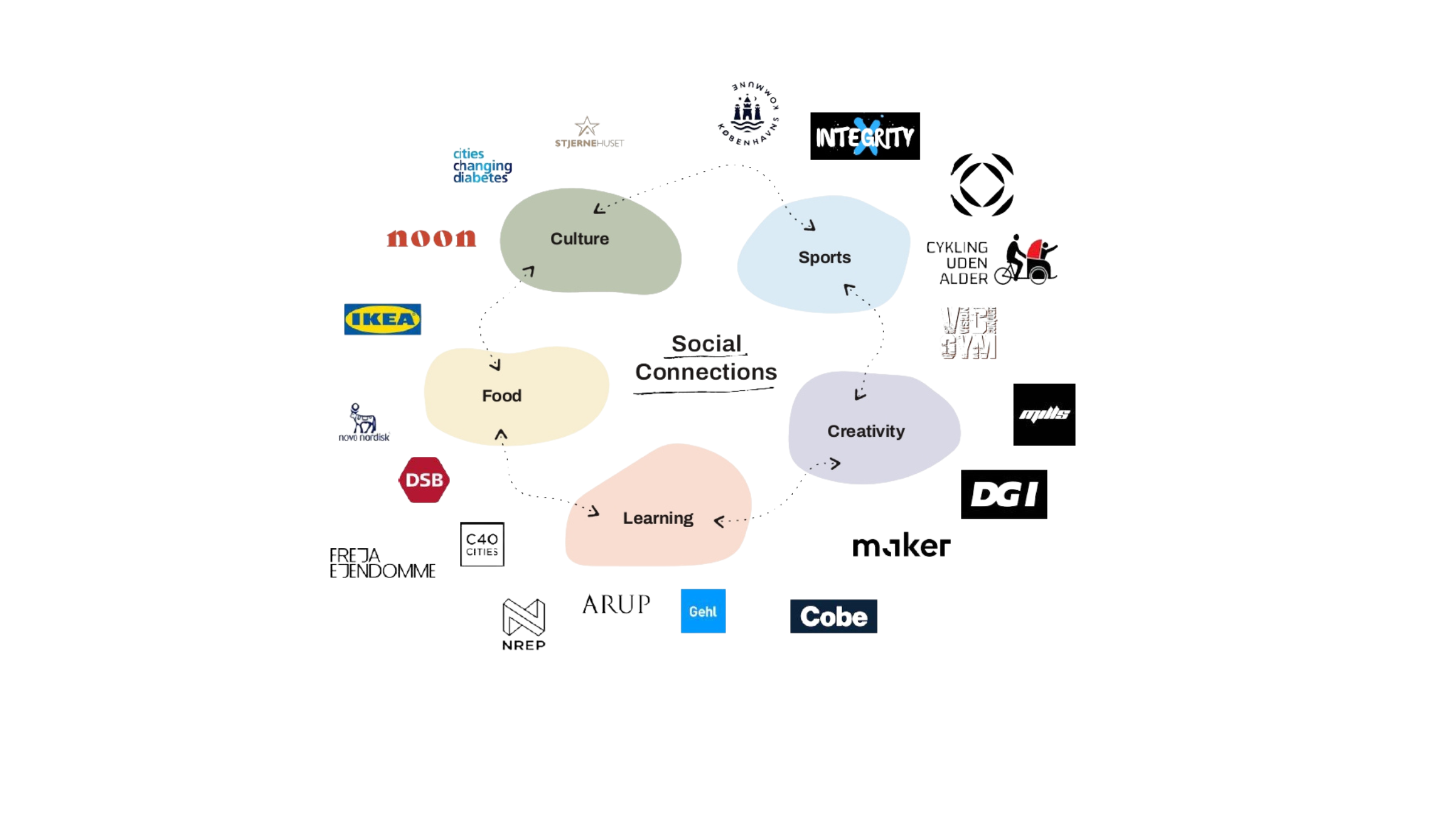
Working across long-term and near-term timescales enabled Spor10 to combine event planning into a larger framework and find organisations and associations that would be integral to the long-term development of this civic hub.
Diagram by Gehl
Building communities through diverse partnerships
Building a vibrant, inclusive community requires working with actors of all types and Spor10 embraced this philosophy from the beginning. The foundation of this approach to community-building are associations and a wide range of other community actors, which are all committed to the vision of a healthy neighborhood and need space to conduct their work. These include a range of groups, from well-established entities like DGI, Cycling without Age and noon; well-recognised associations which did not have the necessary space, such as Mills and Maker; and other groups like Stjernehuset and PlugIn that were just getting started, for which Spor10 could be a catalyst.
The municipality has been another key partner, even though the city does not own the site and it is not planned for it to be a municipal property. Municipal leadership was engaged early because the Spor10 vision aligns very closely with the city’s priorities of expanding access for its residents to healthy recreational, cultural and social activities. As a genuine partner, the municipality was creative and constructive in permitting and also has provided funding to associations in the building.
The landowners have also been key partners, with investments from the Baneby Konsortiet and Freja Ejendomme to help support the early activation. The Spor10 partnership also extends to global companies like Novo Nordisk and IKEA and NGOs such as C40 Cities that share a commitment to the agenda of green and thriving neighborhoods.
This multi-stakeholder partnership work takes a lot of time, but is fundamental to making Spor10 the special place with the unique energy and mix of people it has. Bridging the two-time scales from above, all of these partnerships now are feeding into the design of a new, standalone social enterprise that can take Spor10 forward, including exploring governance models that give the associations that have been involved from the beginning a clear long-term stake and role.
Communities don’t just appear. You need to actively invest in them. And this investment pays off for all stakeholders.
Jesse Shapins, Urban Partners
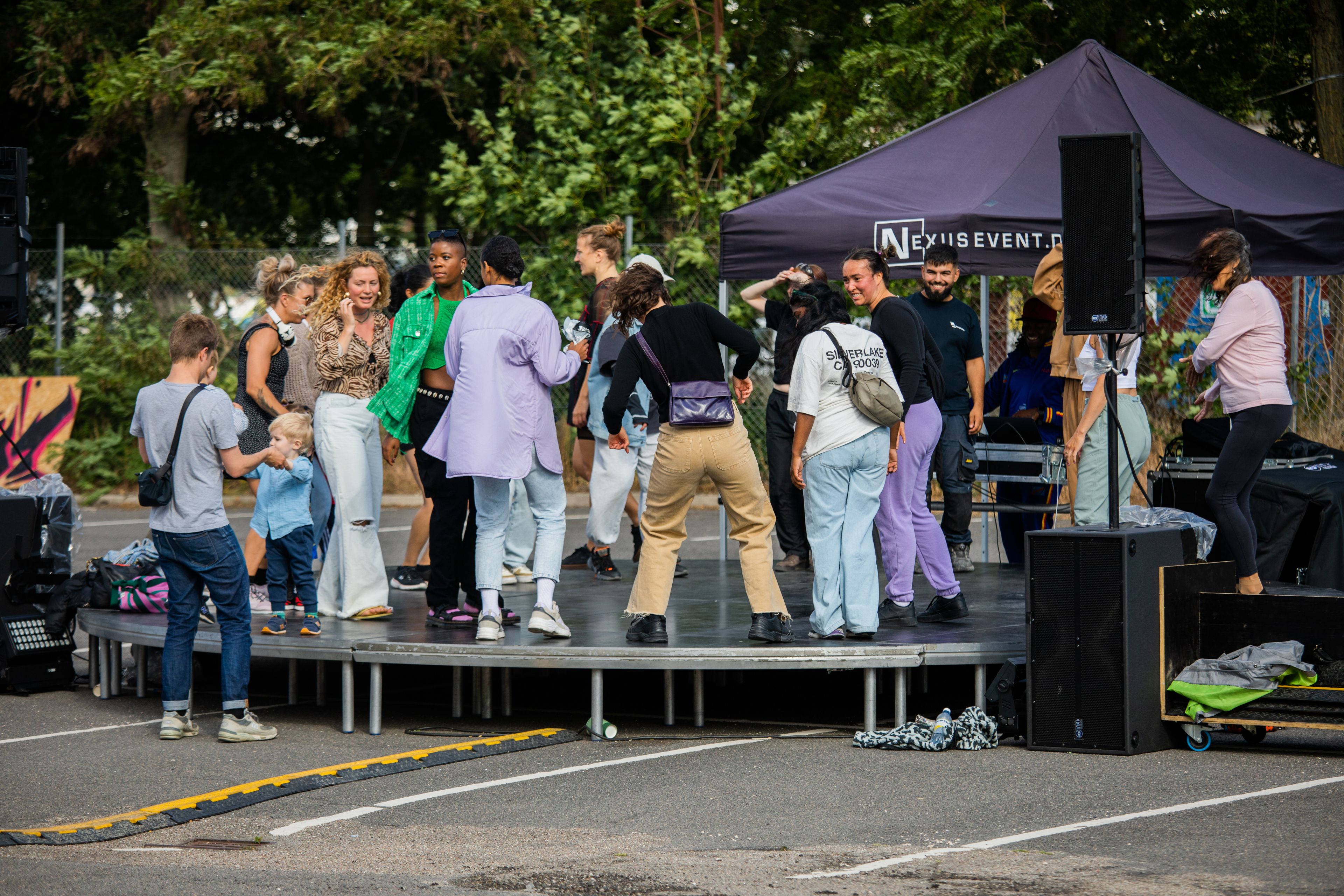
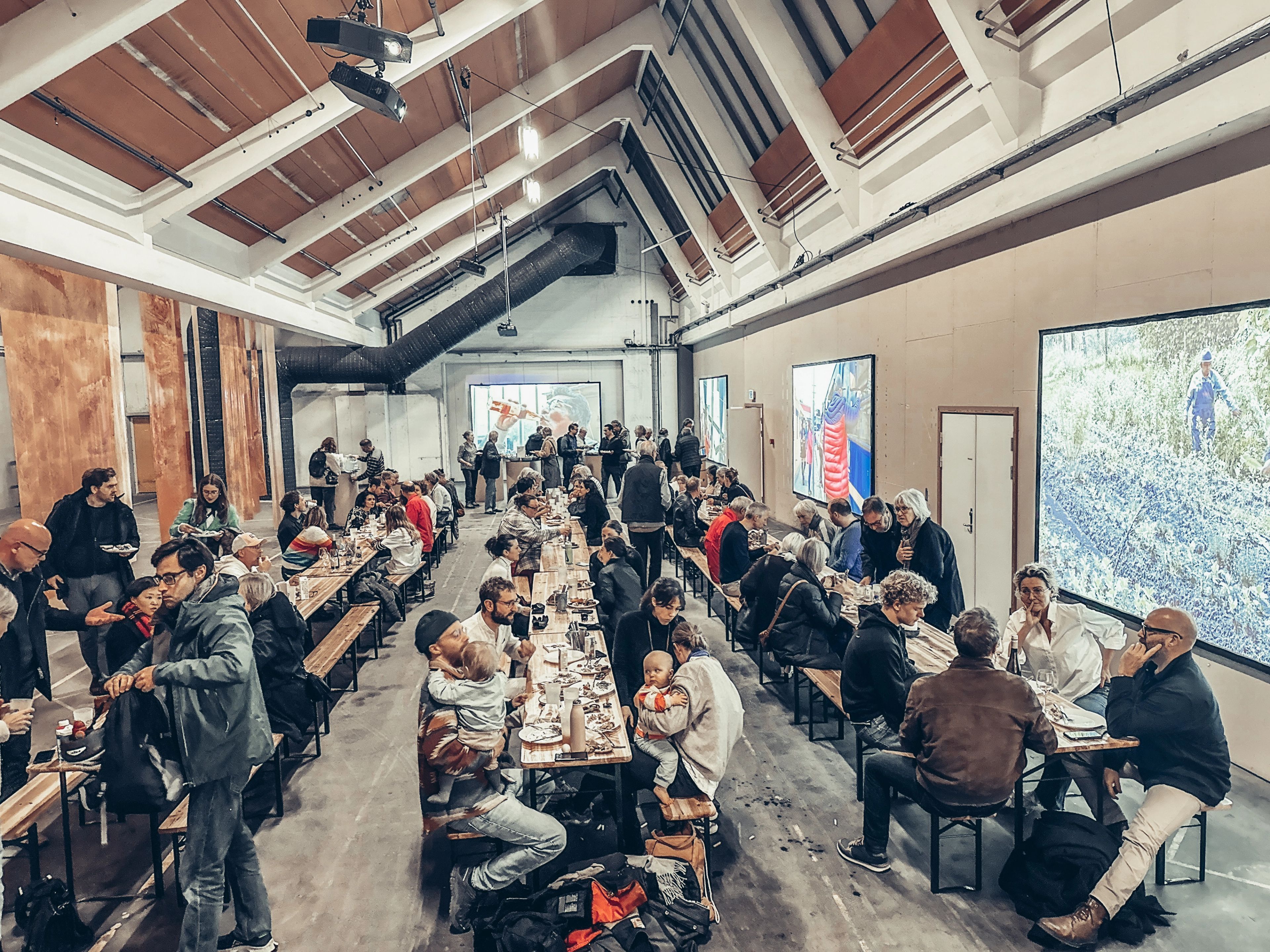
Every Wednesday all actors within Spor10 come together to open their spaces and offer free programs to the public, with a communal dinner at the end of the evening that draws hundreds of people around the city.
Photo by Alpha Mohamad , 2023.
Multidisciplinary collaboration at the core
The complex nature of Spor10 requires integrating more diverse skills and disciplines in the development process. Rather than just having staff focused on finance, construction and planning, the Spor10 team has included specialists with long-standing experience in growing networks of associations and communities in new areas. In addition, Gehl’s strategic design capabilities were an essential addition, both bringing in their collaboration with at the University of Aalborg and the ability to help stitch together all layers of the project. Gehl also was able to bring in , a local design & fabrication group specialized in working creatively with existing buildings. has also been integral, bringing their unique expertise in transforming historic structures into social infrastructure from places like Absalon and Banegaarden. This combination of skills has ensured that the project is linked to the long-term placemaking strategy and drives actual value creation, while bringing the full range of expertise necessary for real community-building to take place.In summary, since its opening in 2023, Spor10 has become a test bed for using innovative social infrastructure as an anchor for inclusive community-building and promoting healthy lifestyles. It is also evidence that placemaking, when anchored in a truly long-term, collaborative approach can deliver impact and value -- as of 2024, the area has transformed into a popular gathering spot, attracting over 25,000 visitors, bringing together over 50 community groups and inspiring dialogues with potential future tenants in the future development who are drawn to the culture & vibrancy of the space.